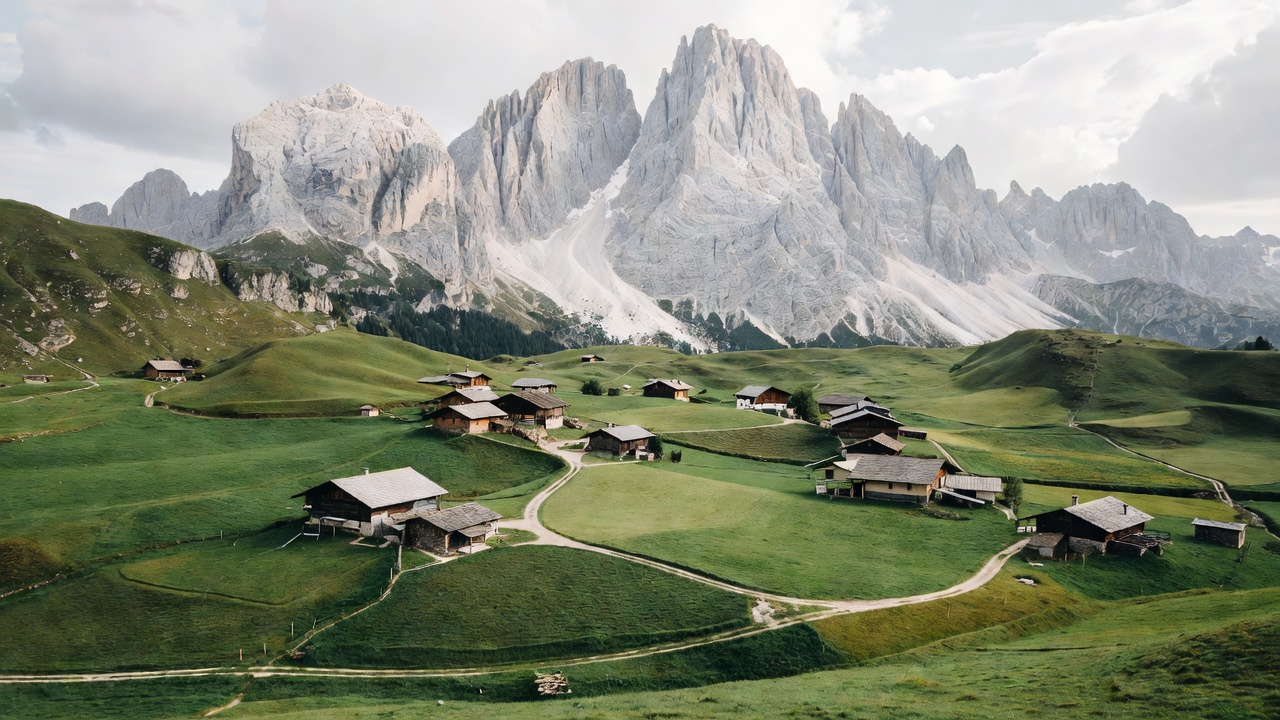
South Tyrol: overlapping traditions
South Tyrol, also known as Alto Adige, offers a useful introduction to the complexity of alpine dining. Around Bolzano and Bruneck, German-speaking and Italian-speaking food cultures meet. Dumplings, pasta, bread, dairy and orchard fruit can sit within the same wider regional conversation. A herb may connect those foods through a butter, a filling or a sauce rather than appearing as the headline ingredient.
The Dolomites give the region an unmistakable visual identity, but the photograph should not do all the explanatory work. Valley floors, sunny slopes and higher settlements have different growing conditions. Ask whether an ingredient was grown near the restaurant, sourced elsewhere in South Tyrol or bought from a specialist outside the region. “Regional” can describe a thoughtful supply network without meaning that every item came from the nearest hillside.
Bavaria and the Allgäu: herbs with dairy
In southern Bavaria and the Allgäu, dairy provides an accessible framework for understanding herb use. Fresh curd preparations, butter, cheese and potatoes give chopped leaves a clear culinary purpose. Chives can make richness feel lighter; parsley can add freshness to a broth or dumpling. These combinations are useful entry points, not a claim that every inn cooks the same food.
The setting also matters. A town restaurant, a mountain hut and a hotel dining room work with different staffing, storage and service patterns. A short menu in a remote location need not be less thoughtful than a long tasting menu in a valley hotel. Judge the clarity of the sourcing and the suitability of the food for your needs rather than assuming that altitude predicts quality.
Tyrol and SalzburgerLand: a broader pantry
Across the Austrian regions of Tyrol and SalzburgerLand, grains, vegetables, dairy and preserved foods provide useful companions to herb-led cooking. In contemporary restaurants, a leaf might appear in a clear infusion or a vegetable course rather than only alongside a traditional preparation. That shift is a kitchen's interpretation of place, not proof that an older style has disappeared.
Innsbruck and the surrounding valleys illustrate another important point: an alpine restaurant may be firmly connected to an urban market. Reliable deliveries, specialist growers and food-safe cultivation are not the opposite of mountain authenticity. They can be the practical conditions that allow a chef to serve a consistent dish while respecting land access, protected habitats and seasonal limits.
Swiss valleys and Savoie: compare carefully
Switzerland's Engadin, Valais and Graubünden should not be collapsed into one generic “Swiss alpine” flavour. Languages, valley connections and local food histories vary. A restaurant in Fürstenau operates in a different setting from a dining room beside a busy resort. Herbs can offer a fresh contrast to rich ingredients, but their specific use belongs to the kitchen rather than to a national rule.
In the French Alps, Savoie and the Lake Annecy area offer another range of contexts. Cheese-led meals are familiar to many visitors, yet lake fish, vegetables, orchard produce and contemporary tasting menus also belong to the wider dining picture. A herb sauce beside a fish course and a chopped leaf in a warm cheese preparation ask different questions of the ingredient. Both can be regionally meaningful.
Distance is not the only measure
Local sourcing can support relationships between restaurants and producers, but a distance claim alone does not establish environmental performance. Growing methods, heating, transport, waste and storage all affect the broader picture. Likewise, wild collection is not automatically gentler on a landscape than cultivation. Volume and harvesting practices matter, especially when a fashionable ingredient attracts attention.
For diners, the most useful question is often specific: “Who supplies this herb, and why did the kitchen choose it?” An answer naming a grower, explaining a preservation technique or acknowledging an out-of-region ingredient gives more information than an unqualified claim of mountain purity. A good regional story can include trade, adaptation and ordinary practical compromises.
Plan a route around understanding
Choose a region by the food culture you want to explore, then check the practical details directly with restaurants and local transport providers. Mountain weather and seasonal closures can affect a visit independently of the menu. This atlas does not supply live schedules, opening hours or reservation availability, and a restaurant mentioned in an essay is not a booking recommendation.
A rewarding comparison might pair a simple valley meal with a more elaborate interpretation nearby. Notice what changes: the treatment of herbs, the balance of dairy and vegetables, the explanation of suppliers. The goal is not to decide which plate is the most authentically alpine. It is to understand how different kitchens make the place intelligible through food.